
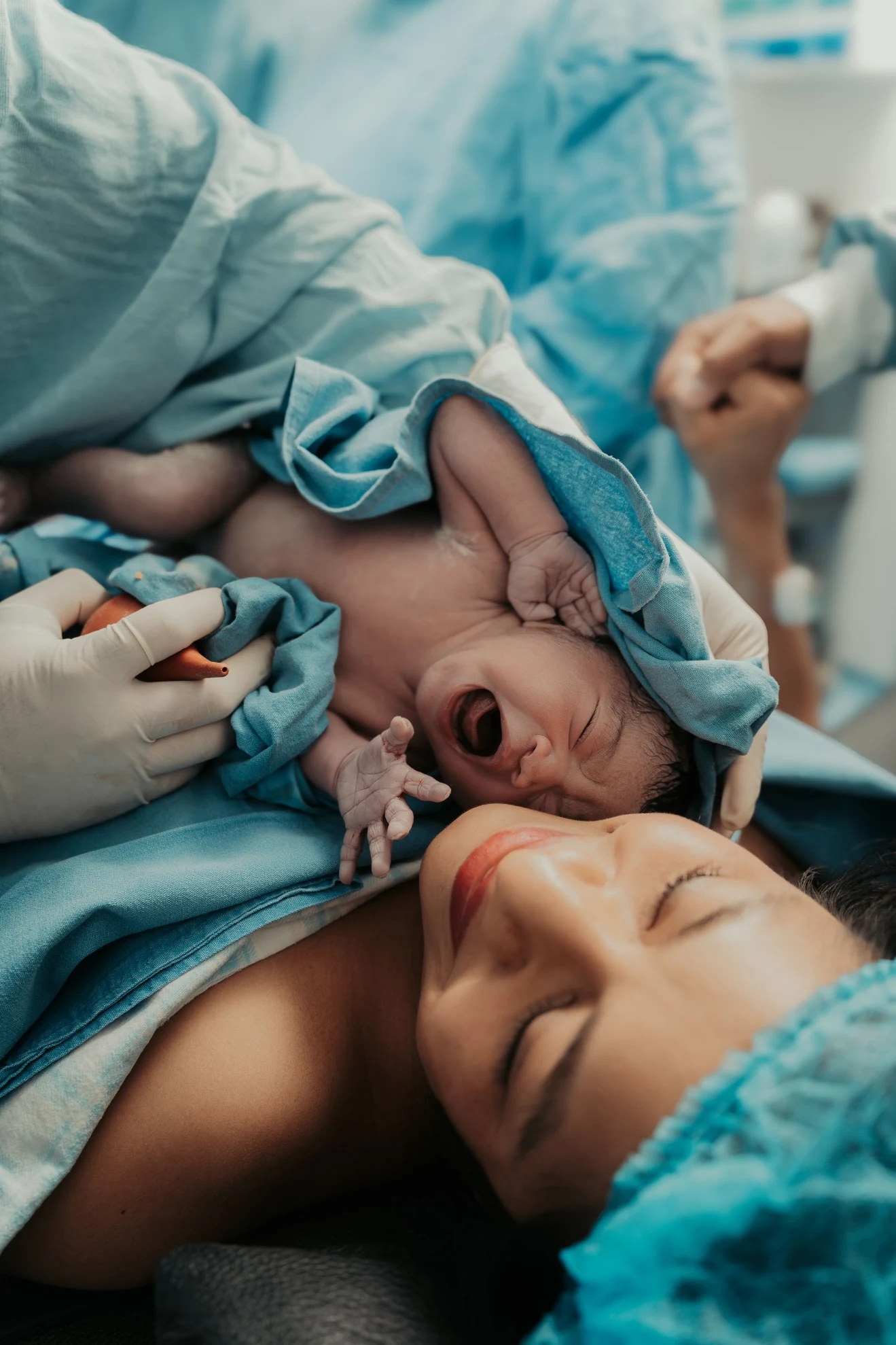
While helping a friend sort through her options for where to deliver, I started wondering what really matters when choosing a maternity hospital.
When choosing a maternity hospital, focus on five things: how close it is to home, what level of emergency and newborn care it offers, how its birth policies match your preferences, what it will cost and what your insurance covers, and how supported you feel when you visit. Distance and emergency readiness matter most because labor can be unpredictable. The rest is about finding a place where you feel respected and comfortable. Let’s look at each of these and the questions worth asking.
Why does the choice of maternity hospital matter?
Most births go smoothly, but you can't know in advance which ones won't. The hospital you choose determines who is in the room, what equipment and medications are available, and how fast help arrives if plans change.
It also shapes the experience itself. Some hospitals encourage movement during labor, skin-to-skin contact right after birth, and having your partner or support person with you the whole time. Others are more rigid. Neither is automatically right or wrong, but the fit matters. Feeling heard and informed during labor is something many parents say stays with them long after the birth.
If you’re still early in pregnancy, you have time. The best time to start looking is well before your third trimester, so you're not making decisions while exhausted and uncomfortable.
How close should the hospital be?
Distance is the first practical filter, one that is often easily underestimated. First labors are often long, but not always, and later labors can be much faster. A hospital that's forty-five minutes away in light traffic might be an hour and a half at rush hour.
When you compare options, think about:
- Travel time at different hours. Try the route at night and during heavy traffic, not just on a quiet afternoon. This allows you to have a more practical estimate of travel time across different time periods. This may be affected by the choice of transport sought, as public transport may be slower than private means.
- How you'll get there. Do you have a car and a driver you can count on? A backup plan is worth having. It is advisable to check how much hailing apps such as Uber/Bolt charge from your residence and whether they are available throughout the day.
- Whether the closest hospital is actually the best fit. A slightly longer trip can be worth it if the farther hospital offers better care for your situation. This is a trade-off to talk over with your doctor, caregiver, or midwife.
What level of care can the hospital provide if something goes wrong?
This is the question people tend to skip, yet it largely influences their experience during birth. Even in a low-risk pregnancy, complications like heavy bleeding, a baby in distress, or a sudden need for a C-section can happen. As a patient, you should ask whether the hospital has:
- Round-the-clock emergency capability. That includes an obstetrician, an anesthetist, and an operating theatre available at any hour, including nights and weekends.
- A neonatal intensive care unit (NICU) or a special care nursery for babies who are born pre-term or need extra help breathing or feeding. If the hospital doesn't have one, ask whether the hospital offers referral options and how quickly referrals and transfers are actualized.
- A blood bank or reliable access to blood in case of hemorrhage.
- Experience with your situation. If you're expecting twins, have a condition like high blood pressure or diabetes, Rhesus positive, or have had a previous C-section, ask specifically how often the team handles cases like yours.
If your pregnancy is considered high risk, your doctor may steer you toward a larger hospital with more specialists on hand. That guidance is worth taking seriously, even if a smaller facility feels cozier.
What are the hospital's policies on labor and birth?
Policies vary widely between facilities, and they are worth understanding before you are in labor. Some good topics to ask about include:
- Support people. How many can be with you, and can they stay during a C-section or overnight?
- Pain relief. Which options are available (epidural, gas, other medications), and is an anesthetist always on site to give an epidural?
- Movement and positions. Are you free to walk around and choose your birth position, or is continuous monitoring expected?
- Skin-to-skin and breastfeeding. Does the hospital place your baby on your chest right after birth, and is there a lactation consultant or trained nurse to help you?
- Rooming-in. Can your baby stay in the room with you, or are they taken to a nursery?
- C-section approach. Ask about the hospital's C-section rate and when they typically recommend one. A higher rate isn’t necessarily bad, since it can reflect a high-risk patient population, but it’s a good conversation starter.
- Length of stay. How long do mothers and babies usually stay after a vaginal birth or a C-section?
There's no perfect set of answers. What you're looking for is a hospital whose approach lines up with what matters to you, and staff who explain their reasoning instead of brushing off your questions.
How much will it cost, and what does insurance cover?
Cost is stressful, so it's better to face it early. Contact the hospital's billing or maternity desk and ask for a clear estimate. Find out:
- What a normal delivery costs versus a C-section, including the room, the doctor’s fees, and the anesthesia.
- What your insurance covers. Check whether the hospital is in your network and what your plan covers for maternity, including complications and newborn care.
- What’s not included. Ask about extras like a private room, extra nights, newborn tests, or a NICU stay if your baby needs one.
- Deposit and payment rules. Some hospitals require a deposit in advance.
Getting this in writing, when possible, helps avoid surprises. If the numbers feel unclear, ask someone at the hospital to walk you through a sample bill.
What should I ask on a hospital tour?
A tour or a visit to the maternity ward tells you things a website can't. If the hospital offers one, take it, and bring your partner or support person. While you're there, pay attention to:
- How staff treat you. Are they patient with questions, or do they seem rushed?
- Cleanliness and atmosphere. Does the ward feel calm and well-kept?
- Nurse-to-patient ratios. Ask how many mothers each nurse or midwife looks after, especially at night.
- The practical details. Where do you park, where do you check in when you arrive in labor, and what happens if the ward is full?
It's also worth talking to friends, family, and other parents who delivered there recently. Recent, specific experiences (how long they waited, how the staff communicated, how their postpartum care went) are more useful than star ratings alone. Just keep in mind that every birth is different, so treat each story as one data point.
Why Juja Road Hospital is worth considering
If you're weighing your options in Nairobi, Juja Road Hospital is worth a look. It's a specialist hospital focused on the health of women and children, with a team of trained medical professionals and modern equipment supporting its maternity services. A few reasons it stands out:
- Emergency-ready care. Juja Road Hospital has a NICU on-site along with the capacity to handle emergency obstetric care, which covers two of the most important boxes to tick when choosing where to deliver.
- Focused specialty care. Their specialties center on maternity services, gynaecology consultancy, and major and minor surgery, so the teams work with pregnancy and birth day in and day out.
- Established track record. With a 60+ bed capacity and over 10,000 patients treated, it's a facility with real experience behind it.
- Insurance-friendly. They accept a wide range of insurance cards, which can take some of the financial stress out of planning your delivery.
- Family-centered approach. Their team builds individualized care plans and treats every enquiry in strict confidence, which matters when you want to feel heard, not rushed.
- Two convenient branches. Whether you're closer to Pangani or Ruiru, there's a branch nearby.
Ready to find out more?
Reach out with your questions about their maternity services, book a tour of the facility, and see if it feels like the right fit for you and your baby.
How do I make the final decision?
After you’ve gathered information, sit down with your partner or support person and compare your top choices side by side. A simple list of “must-haves” and “nice-to-haves” helps a lot.
For many people, must-haves include a nearby location, emergency capability, and affordability. Nice-to-haves might be a private room, a birthing tub, or extended visiting hours.
Then check in with your gut. If one hospital left you feeling respected and reassured, that counts. And if your care provider recommends a particular hospital because of your health needs, ask them to explain why so you can decide with full information.
Finally, keep a backup in mind. Labor doesn't always go according to plan, and a hospital might be full or a transfer might be needed. Knowing your second choice takes some pressure off.
Choosing where to give birth is a big decision, but you don't have to be an expert to make a good one. Ask questions, visit if you can, and trust the answers that make you feel safe and supported. This article is general information and not medical advice, so bring your questions to your doctor or midwife too.